Blockchain-based ID Management
Cross-cultural blockchain identity research revealing how trust models differ between European and Asian users, informing adaptive design.
Blockchain-based ID Management
Cross-cultural blockchain identity research revealing how trust models differ between European and Asian users, informing adaptive design.
Blockchain-based ID Management
Cross-cultural blockchain identity research revealing how trust models differ between European and Asian users, informing adaptive design.
Category
Prototype
Prototype
Prototype
Date
Aug 2024
Aug 2024
Aug 2024
Overview
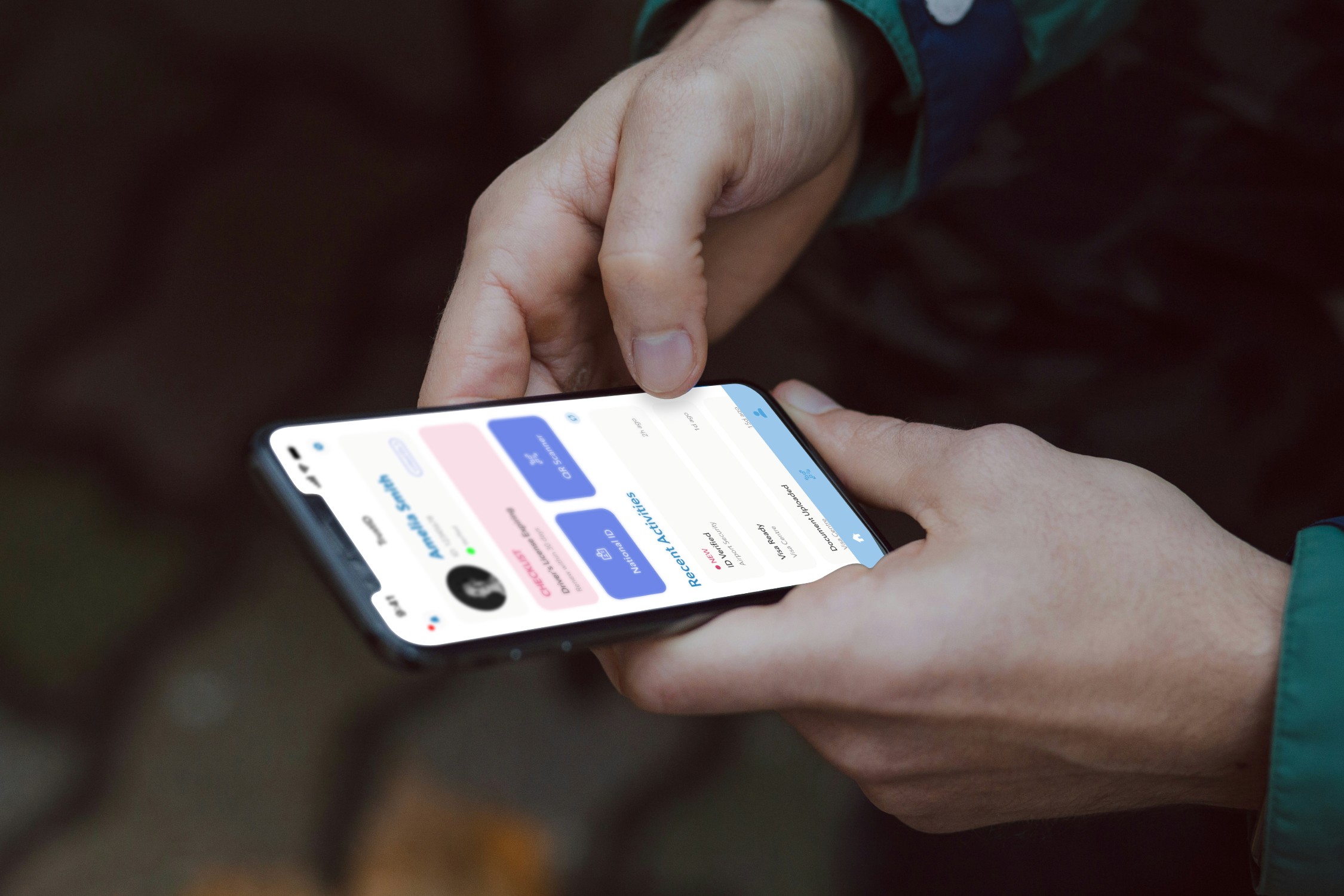
As my MA User Experience Design project, I investigated whether blockchain's decentralised architecture could address identity fraud, which affected 93% of organisations in 2023. Whilst respecting cultural differences in trust frameworks and privacy expectations.
Through mixed-methods research: surveys and in-depth interviews across European and Asian regions. I employed ATLAS.ti thematic analysis to code recurring patterns. European participants demonstrated analytic thinking: prioritising individual data control and transparency. Asian participants exhibited holistic thinking: valuing institutional trustworthiness and comprehensive guidance within trusted frameworks.
I translated these cognitive differences into Figma prototypes demonstrating adaptive information architecture: low-context minimalist interfaces for European users versus high-context detailed designs for Asian users, whilst maintaining identical security protocols. This research establishes that inclusive blockchain design requires understanding underlying cultural cognition models, not superficial localisation.
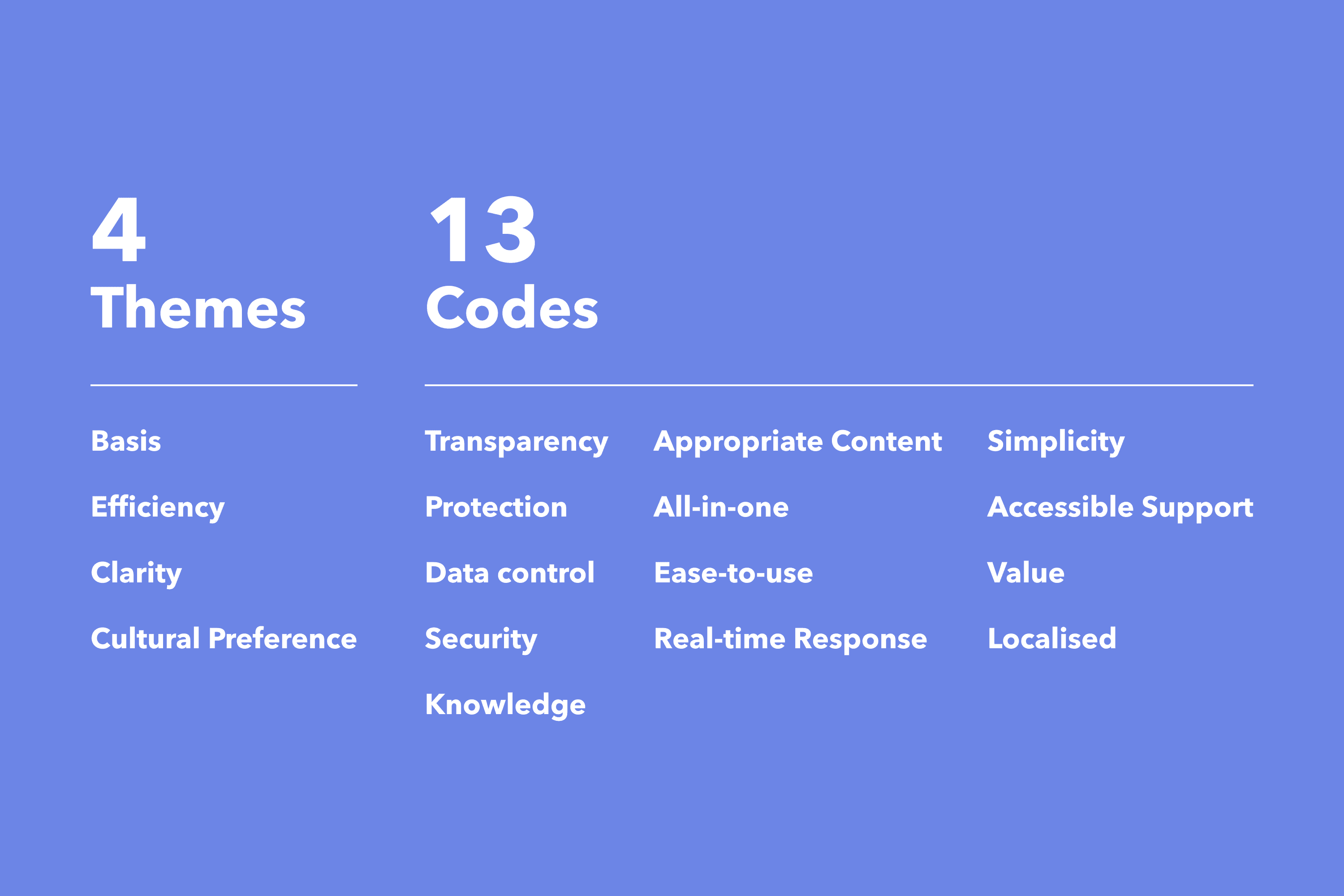
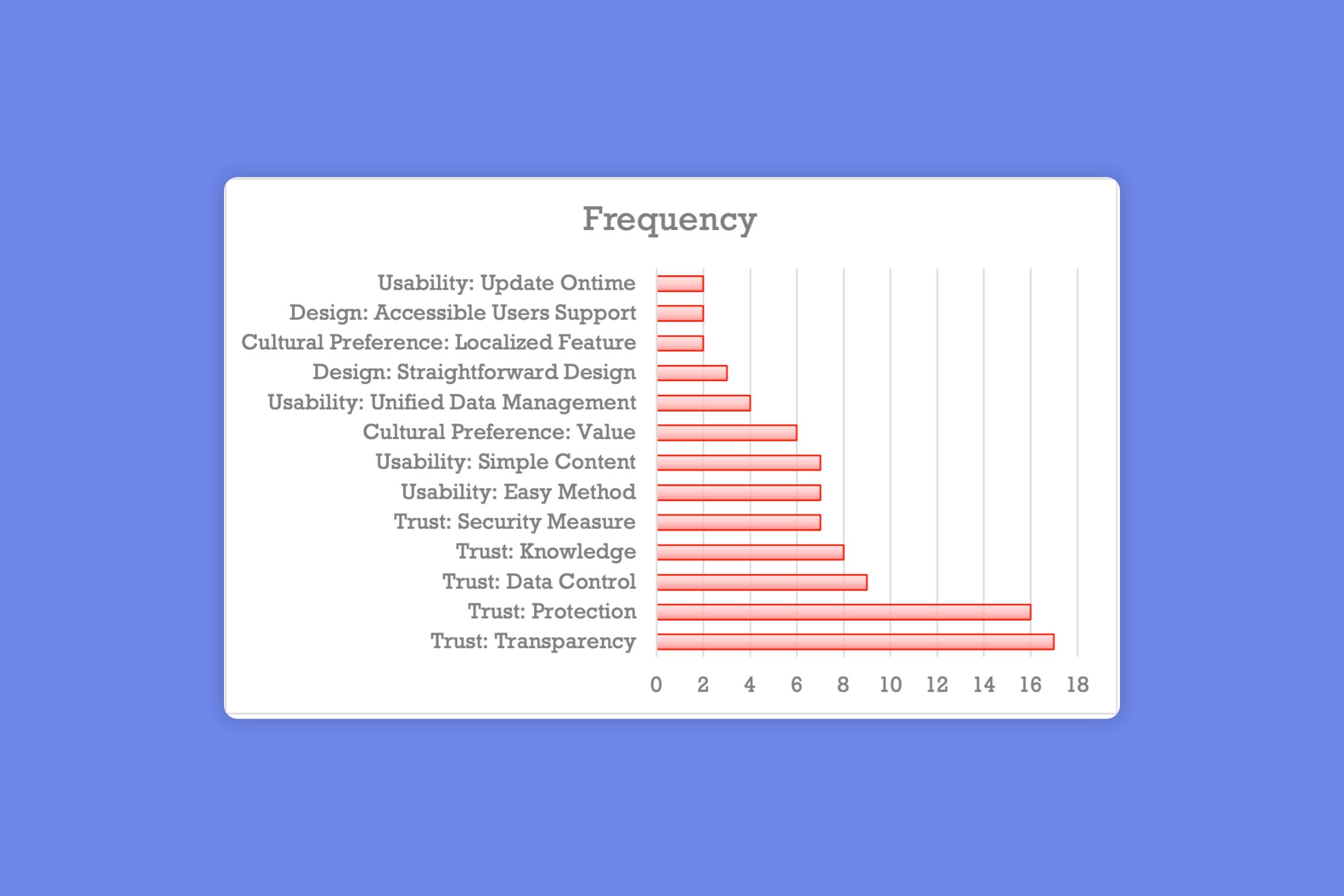
The left framework visualises my systematic interview analysis: 13 codes organised across four themes (Basis, Efficiency, Clarity, Cultural Preference). Transparency emerged as the highest-priority code, mentioned 17 times across all participants, followed by protection (14) and data control (13). The right chart shows code frequency distribution, revealing that whilst European interviewees used autonomy-focused language ("I control my data"), Asian participants emphasised systemic reliability ("the organisation protects me"). This dual-layer analysis: thematic organisation plus frequency mapping established evidence-based design requirements, ensuring prototypes addressed genuine cognitive differences rather than cultural assumptions.
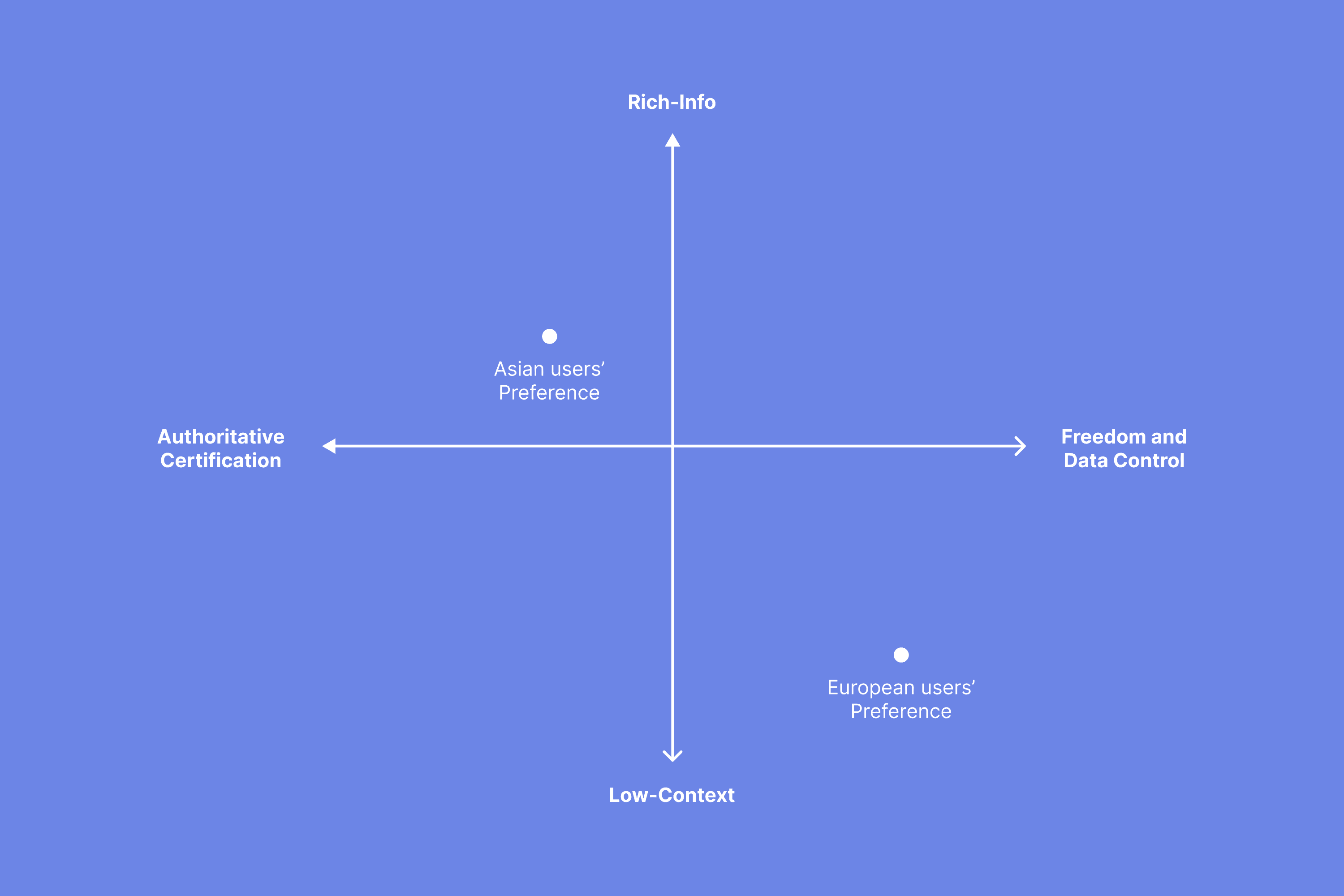
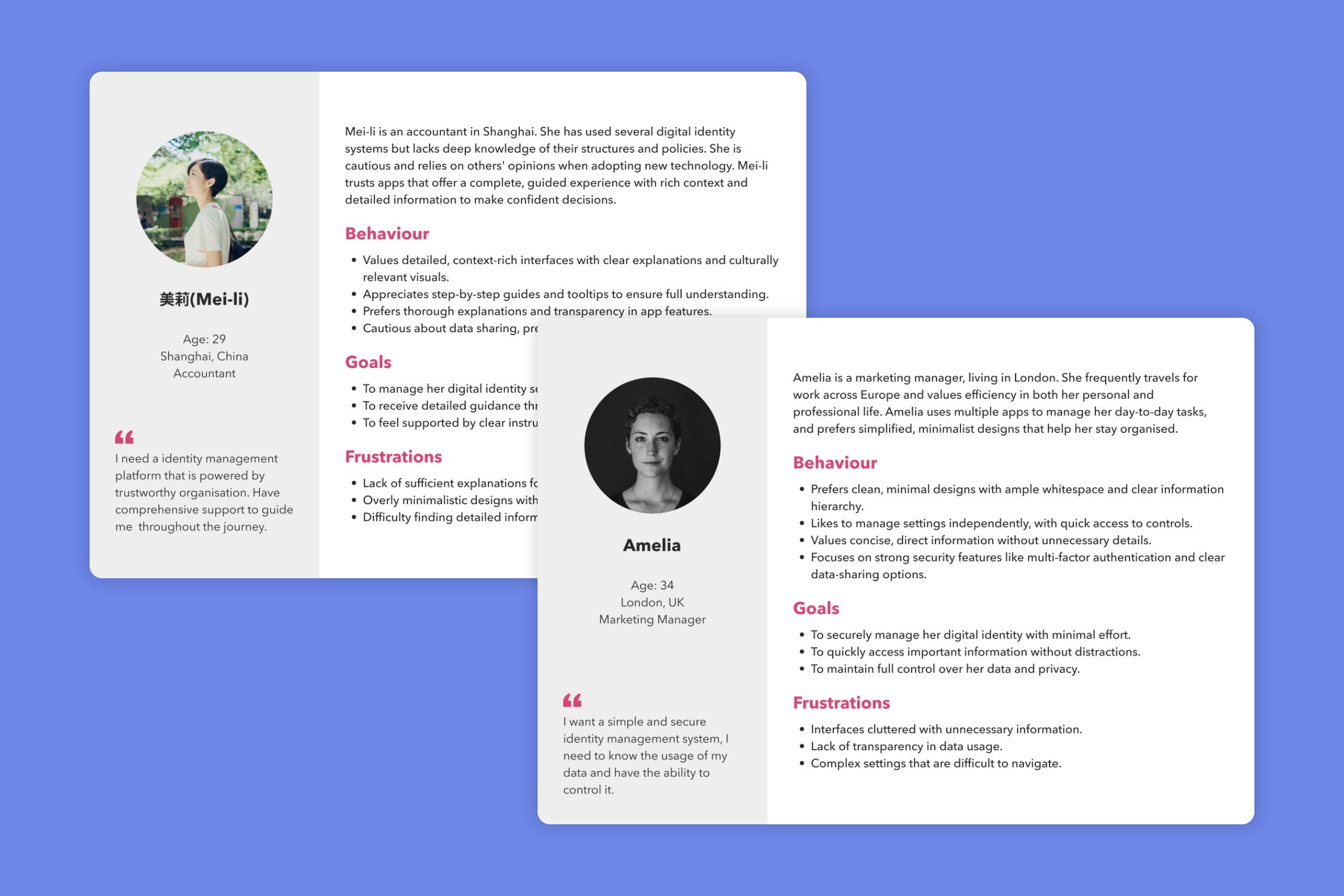
The left framework distills survey and interview findings into divergent trust models: European users prioritise individual data control, clear communication, and strong security measures. Reflecting analytic cognition focused on autonomous decision-making. Asian users emphasise overall system trustworthiness, comprehensive support, and security within trusted frameworks. Reflecting holistic thinking valuing institutional reliability. The right personas translate these frameworks into concrete archetypes: Amelia (London) embodies European preferences for transparent control and minimal interfaces; Mei-li (Shanghai) represents Asian needs for comprehensive guidance from trusted organisations. This systematic research-to-design translation ensures prototypes address cognitive differences, not cultural stereotypes.
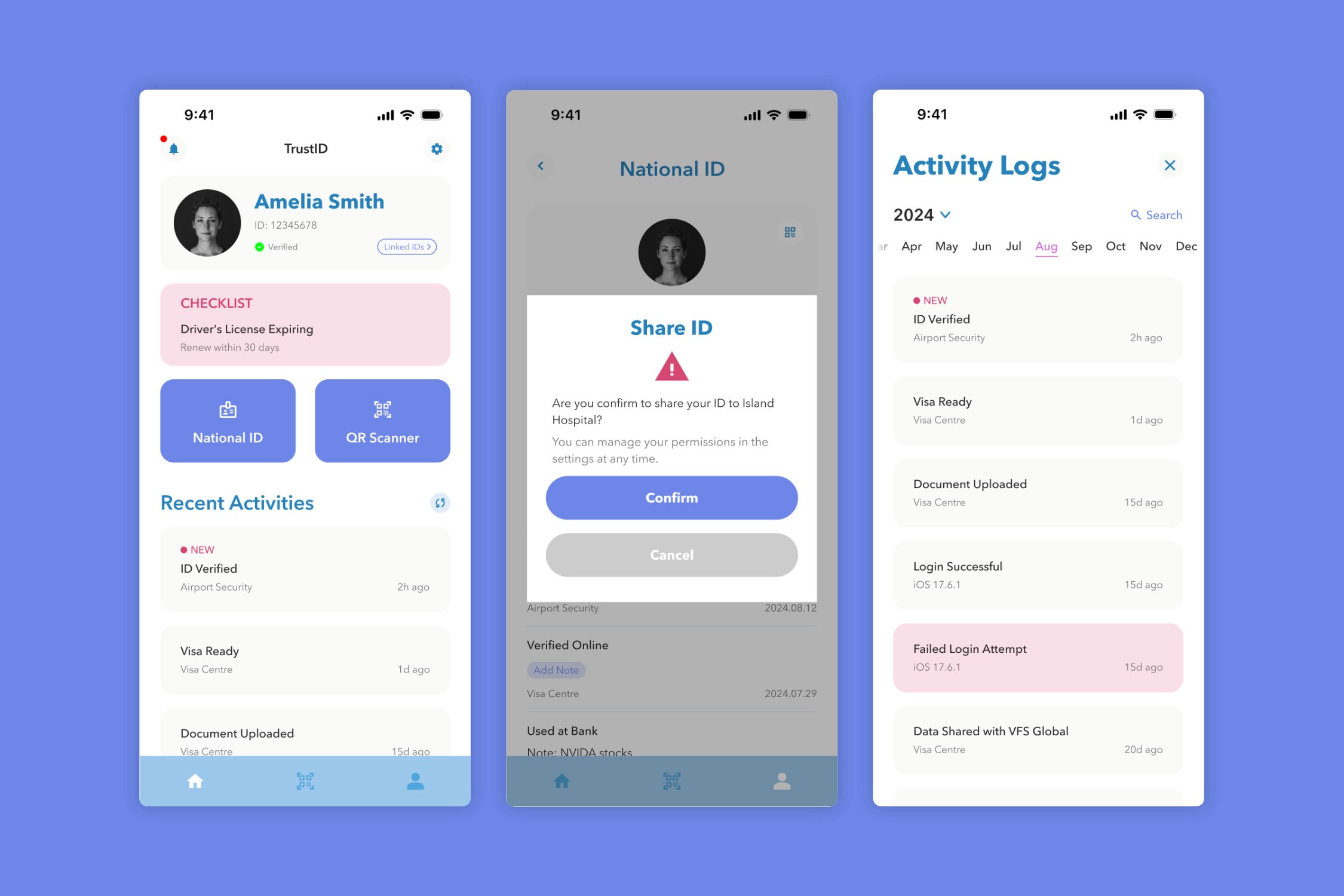
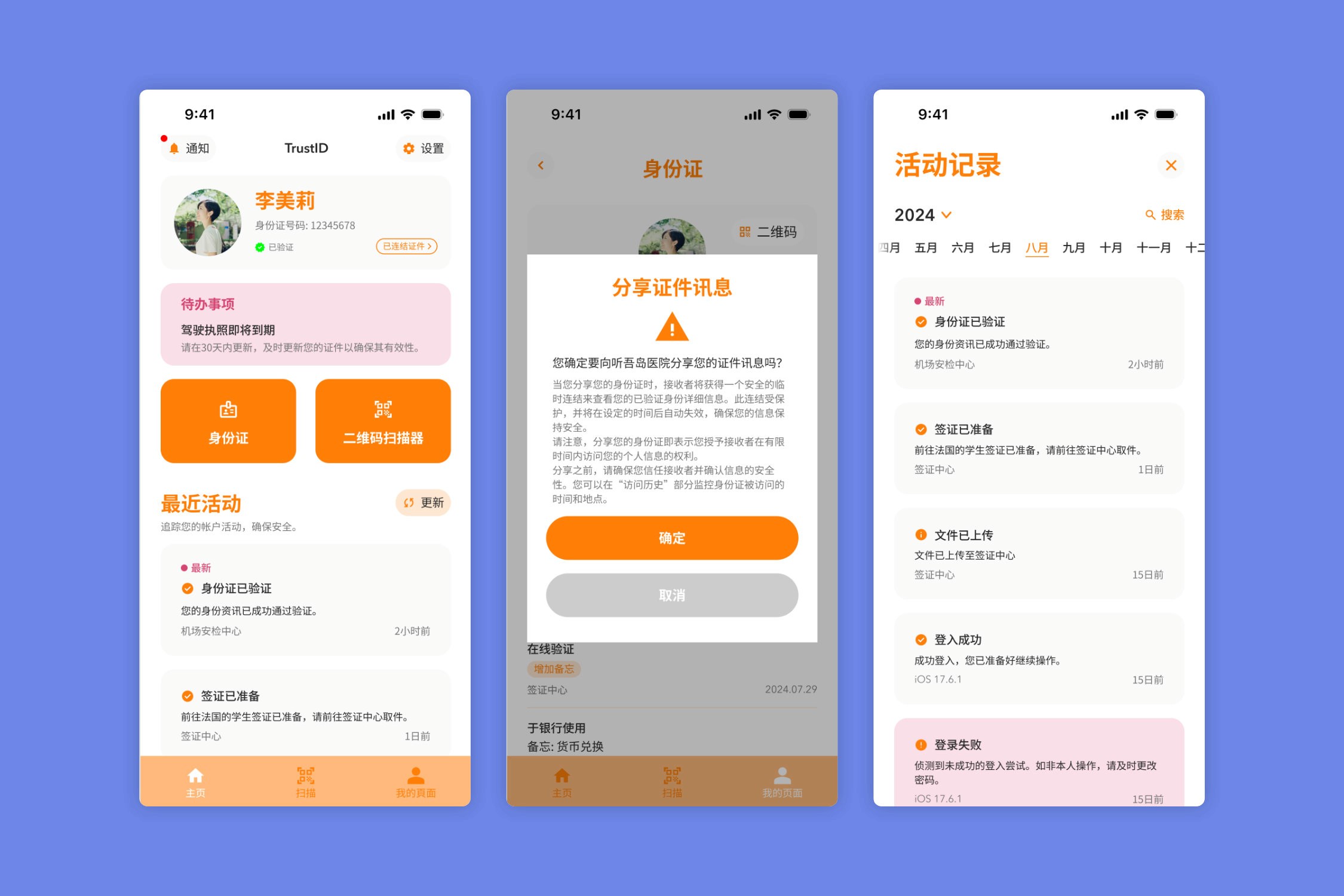
These prototypes operationalise research findings through contrasting information hierarchies. The left European interface employs direct communication: prominent permission toggles, minimal explanatory text, clear privacy statements. Supporting users' preference for autonomous decision-making and low-context interaction. The right Asian interface integrates comprehensive context: explanatory modals with icons, guided workflows, detailed activity descriptions. Addressing users' need for holistic understanding and authoritative guidance. Both maintain identical blockchain security architecture and Self-Sovereign Identity principles; divergence lies purely in cognitive scaffolding. This validates that technical integrity and cultural responsiveness aren't contradictory but complementary design goals.
Blockchain-based ID Management
Cross-cultural blockchain identity research revealing how trust models differ between European and Asian users, informing adaptive design.
Blockchain-based ID Management
Cross-cultural blockchain identity research revealing how trust models differ between European and Asian users, informing adaptive design.
Blockchain-based ID Management
Cross-cultural blockchain identity research revealing how trust models differ between European and Asian users, informing adaptive design.
Category
Prototype
Prototype
Prototype
Date
Aug 2024
Aug 2024
Aug 2024
Overview
As my MA User Experience Design project, I investigated whether blockchain's decentralised architecture could address identity fraud, which affected 93% of organisations in 2023. Whilst respecting cultural differences in trust frameworks and privacy expectations.
Through mixed-methods research: surveys and in-depth interviews across European and Asian regions. I employed ATLAS.ti thematic analysis to code recurring patterns. European participants demonstrated analytic thinking: prioritising individual data control and transparency. Asian participants exhibited holistic thinking: valuing institutional trustworthiness and comprehensive guidance within trusted frameworks.
I translated these cognitive differences into Figma prototypes demonstrating adaptive information architecture: low-context minimalist interfaces for European users versus high-context detailed designs for Asian users, whilst maintaining identical security protocols. This research establishes that inclusive blockchain design requires understanding underlying cultural cognition models, not superficial localisation.
The left framework visualises my systematic interview analysis: 13 codes organised across four themes (Basis, Efficiency, Clarity, Cultural Preference). Transparency emerged as the highest-priority code, mentioned 17 times across all participants, followed by protection (14) and data control (13). The right chart shows code frequency distribution, revealing that whilst European interviewees used autonomy-focused language ("I control my data"), Asian participants emphasised systemic reliability ("the organisation protects me"). This dual-layer analysis: thematic organisation plus frequency mapping established evidence-based design requirements, ensuring prototypes addressed genuine cognitive differences rather than cultural assumptions.
The left framework distills survey and interview findings into divergent trust models: European users prioritise individual data control, clear communication, and strong security measures. Reflecting analytic cognition focused on autonomous decision-making. Asian users emphasise overall system trustworthiness, comprehensive support, and security within trusted frameworks. Reflecting holistic thinking valuing institutional reliability. The right personas translate these frameworks into concrete archetypes: Amelia (London) embodies European preferences for transparent control and minimal interfaces; Mei-li (Shanghai) represents Asian needs for comprehensive guidance from trusted organisations. This systematic research-to-design translation ensures prototypes address cognitive differences, not cultural stereotypes.
These prototypes operationalise research findings through contrasting information hierarchies. The left European interface employs direct communication: prominent permission toggles, minimal explanatory text, clear privacy statements. Supporting users' preference for autonomous decision-making and low-context interaction. The right Asian interface integrates comprehensive context: explanatory modals with icons, guided workflows, detailed activity descriptions. Addressing users' need for holistic understanding and authoritative guidance. Both maintain identical blockchain security architecture and Self-Sovereign Identity principles; divergence lies purely in cognitive scaffolding. This validates that technical integrity and cultural responsiveness aren't contradictory but complementary design goals.
Blockchain-based ID Management
Cross-cultural blockchain identity research revealing how trust models differ between European and Asian users, informing adaptive design.
Blockchain-based ID Management
Cross-cultural blockchain identity research revealing how trust models differ between European and Asian users, informing adaptive design.
Blockchain-based ID Management
Cross-cultural blockchain identity research revealing how trust models differ between European and Asian users, informing adaptive design.
Category
Prototype
Prototype
Prototype
Date
Aug 2024
Aug 2024
Aug 2024
Overview
As my MA User Experience Design project, I investigated whether blockchain's decentralised architecture could address identity fraud, which affected 93% of organisations in 2023. Whilst respecting cultural differences in trust frameworks and privacy expectations.
Through mixed-methods research: surveys and in-depth interviews across European and Asian regions. I employed ATLAS.ti thematic analysis to code recurring patterns. European participants demonstrated analytic thinking: prioritising individual data control and transparency. Asian participants exhibited holistic thinking: valuing institutional trustworthiness and comprehensive guidance within trusted frameworks.
I translated these cognitive differences into Figma prototypes demonstrating adaptive information architecture: low-context minimalist interfaces for European users versus high-context detailed designs for Asian users, whilst maintaining identical security protocols. This research establishes that inclusive blockchain design requires understanding underlying cultural cognition models, not superficial localisation.
The left framework visualises my systematic interview analysis: 13 codes organised across four themes (Basis, Efficiency, Clarity, Cultural Preference). Transparency emerged as the highest-priority code, mentioned 17 times across all participants, followed by protection (14) and data control (13). The right chart shows code frequency distribution, revealing that whilst European interviewees used autonomy-focused language ("I control my data"), Asian participants emphasised systemic reliability ("the organisation protects me"). This dual-layer analysis: thematic organisation plus frequency mapping established evidence-based design requirements, ensuring prototypes addressed genuine cognitive differences rather than cultural assumptions.
The left framework distills survey and interview findings into divergent trust models: European users prioritise individual data control, clear communication, and strong security measures. Reflecting analytic cognition focused on autonomous decision-making. Asian users emphasise overall system trustworthiness, comprehensive support, and security within trusted frameworks. Reflecting holistic thinking valuing institutional reliability. The right personas translate these frameworks into concrete archetypes: Amelia (London) embodies European preferences for transparent control and minimal interfaces; Mei-li (Shanghai) represents Asian needs for comprehensive guidance from trusted organisations. This systematic research-to-design translation ensures prototypes address cognitive differences, not cultural stereotypes.
These prototypes operationalise research findings through contrasting information hierarchies. The left European interface employs direct communication: prominent permission toggles, minimal explanatory text, clear privacy statements. Supporting users' preference for autonomous decision-making and low-context interaction. The right Asian interface integrates comprehensive context: explanatory modals with icons, guided workflows, detailed activity descriptions. Addressing users' need for holistic understanding and authoritative guidance. Both maintain identical blockchain security architecture and Self-Sovereign Identity principles; divergence lies purely in cognitive scaffolding. This validates that technical integrity and cultural responsiveness aren't contradictory but complementary design goals.